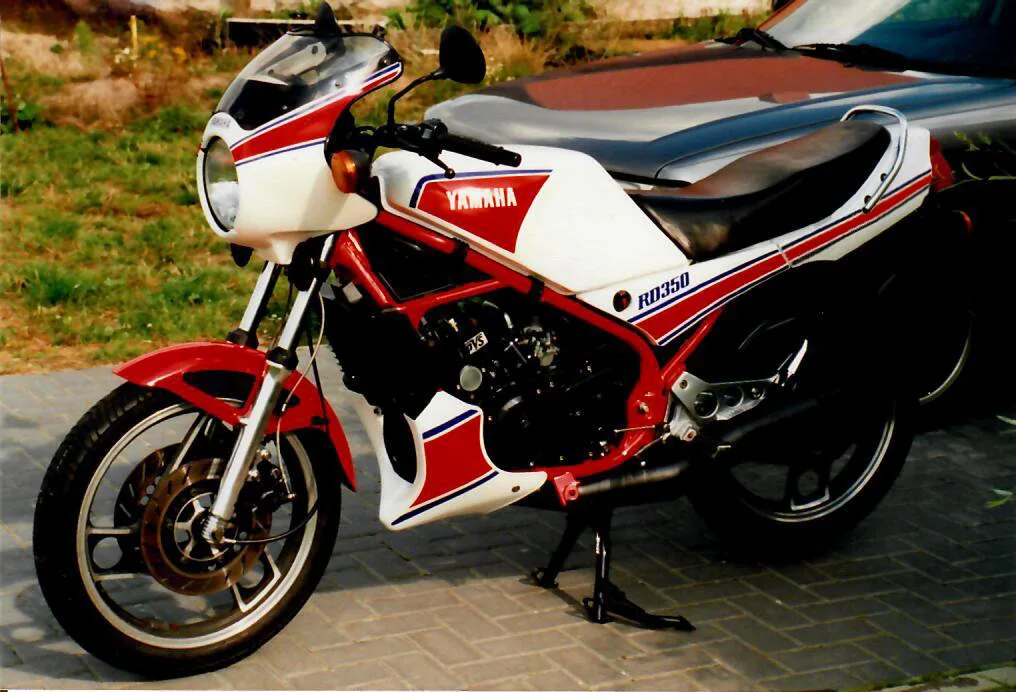
Yamaha's RD350 YPVS (Powervalve) models are identified by the prefix of their frame and engine numbers, and the codes mark real mechanical generations. 31K is the first Powervalve, the RD350LC II of 1983–84, with a claimed 59 bhp, a new frame and the YPVS exhaust power valve. For 1985 came the faired F (57V) and naked N (1JF), one-year models still built around 31K numbers. The 1986 FII and NII (1WT/1WA) brought a heavily revised engine with power-jet carburettors and a claimed 63 bhp; their electrics are the generation stamped 1UA on the CDI, and '86-on stators and rotors only work as matched sets. Japanese FII production ran into the early nineties. In 1992 production moved to Brazil: the RD350R (chassis prefix 4CE, type code 1CE) wore a twin-headlight fairing and was built until about 1995. America knew the Powervalve as the RZ350 (1984–85), including the yellow Kenny Roberts signature edition. US models carried catalytic converters in the exhausts.
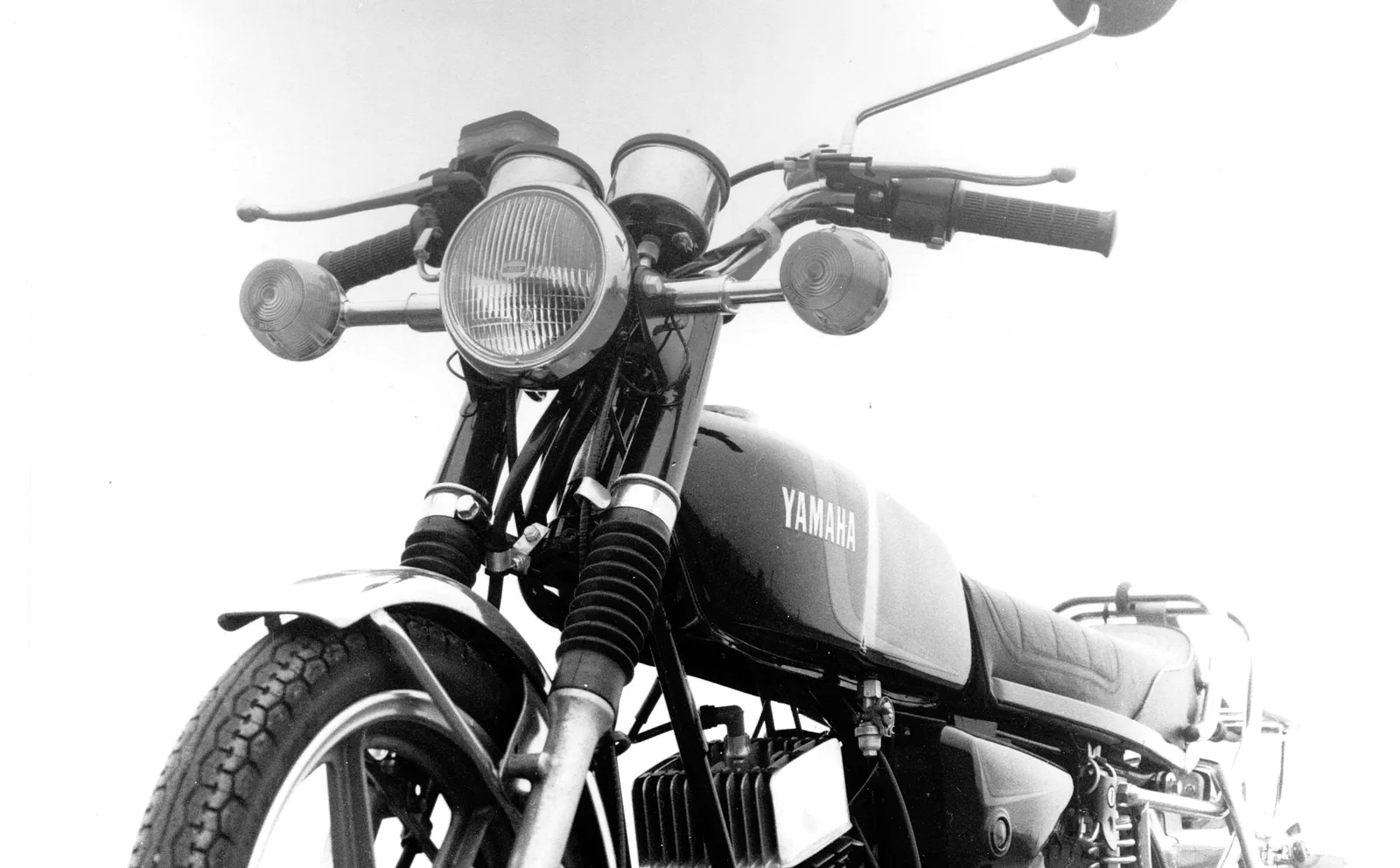
The Yamaha RD50 was the smallest motorcycle ever to carry the RD badge: a 49 cc air-cooled two-stroke single with reed-valve induction, launched in Japan in March 1978 and sold across Europe into the early 1980s. Japanese-market specification was 6.3 PS at 9,500 rpm and about 85 kg, with a proper motorcycle layout — fuel tank ahead of the rider, a real gearbox and clutch, and 18-inch wheels — rather than the step-through layout of most 50 cc mopeds. A sportier RD50SP followed in June 1978 with seven-spoke cast wheels. In Britain the bike was the RD50M, restricted to 30 mph and sold to sixteen-year-olds alongside Yamaha's famous FS1-E; in Germany the RD50M became a staple of the moped classes and survivors are commonest there today. The RD50's job in the range was recruitment: it put teenagers on an RD years before they could legally ride the 250s and 350s, and many stayed loyal to the badge for life. In unrestricted Japanese form it was good for over 70 km/h.
The Yamaha RD80LC (1982–84) was the smallest of Yamaha's liquid-cooled RDs: a 79cc two-stroke single (49mm × 42mm, six-speed, 78kg) built for Europe's 80cc licence classes, making 8.7–10bhp depending on market, with German versions limited to 80km/h by design. It replaced the air-cooled RD80MX and is identified by frame codes 11A (UK), 10X (Germany LC-1), 10Y (France) and 30W (Germany LC-2).
The Yamaha RD200 (1973–79) was a 195 cc two-stroke parallel twin, and the only air-cooled RD with electric start: a dynastarter — a DC generator that reversed polarity to crank the engine. Yamaha's factory figure was 20 bhp at 8,000 rpm; Bike magazine trapped one at 86 mph in 1974. The disc-braked restyle was the RD200DX.