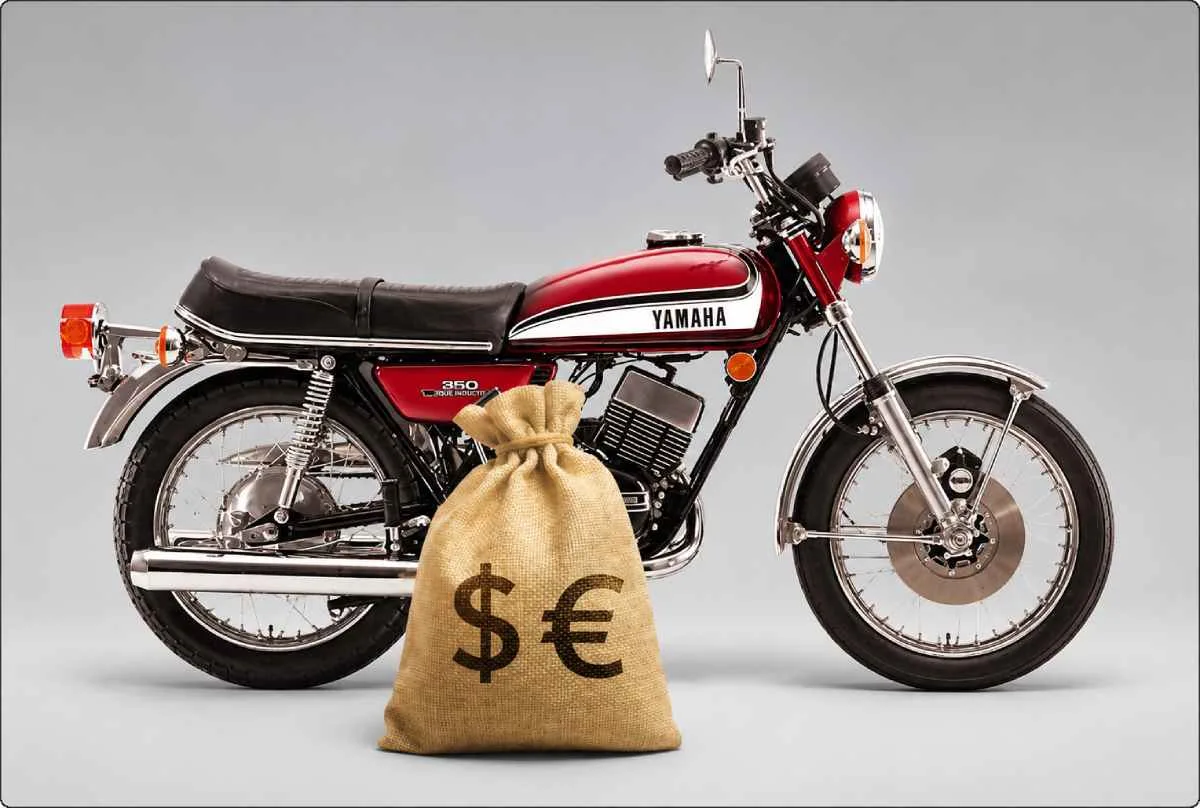
RD350 Restoration Cost Guide: USA & UK Budget Management
Restoring a Yamaha RD350 in the USA or UK costs between $3,000–$20,000+ depending on restoration level, donor bike condition, and whether you DIY or use a specialist workshop. A functional street restoration typically runs $5,000–$10,000 in the USA and £4,000–£8,500 in the UK, covering engine rebuild, carburetor restoration, bodywork, suspension, electrical systems, and exhaust. Engine rebuilds alone range from $800–$5,500 (USA) and £640–£4,400 (UK). Key cost management strategies include phased restoration, contingency budgeting of 20%, sourcing parts through LCGB (UK) or AHRMA (USA) communities, and separating DIY tasks from specialist work. Always assess donor bike condition before committing to a full budget.
By shoprd332 views
Advertisement
RD350 Restoration Cost Guide: USA & UK Budget Management
1. Introduction: Why RD350 Restoration Costs More Than You Think {#introduction}
The Yamaha RD350 is one of the most beloved two-stroke motorcycles ever built. Whether it's the air-cooled LC variant from the mid-1970s or the water-cooled YPVS version of the 1980s, these machines occupy a legendary place in motorcycle culture on both sides of the Atlantic. In the USA, the RD350 built a cult following among enthusiasts who appreciated its razor-sharp handling and screaming two-stroke power. In the UK, the LC (Liquid-Cooled) variant became an icon of an entire generation of young riders.
But nostalgia doesn't come cheap.
If you've recently bought a barn-find RD350, inherited one from a family member, or started searching for a project bike, you've probably already sensed that restoration costs can spiral quickly. The two-stroke engine requires specialist knowledge. Period-correct parts are increasingly scarce. And the global community of RD350 restorers — while passionate and generous with advice — will tell you honestly: budgeting poorly is the number one reason restorations stall or fail.
This guide is written specifically for RD350 owners and enthusiasts in the USA and UK. It uses real-world cost data from the current market (2023–2025), draws on community knowledge from forums, specialist workshops, and parts suppliers, and gives you the tools to manage your restoration budget intelligently from day one.
Whether you're planning a full concours-level restoration, a functional street-legal rebuild, or a track-day performance build, this guide will help you understand exactly where your money goes — and how to make it go further.
2. Understanding the Full Scope of RD350 Restoration {#scope}
2.1 Types of RD350 Restoration Projects {#types}
Before you can build a meaningful budget, you need to define what kind of restoration you're undertaking. Not all restoration projects are equal, and the cost differences between them can be enormous.
Full Concours Restoration This is the most expensive and time-consuming approach. Every component is either restored to factory specification or replaced with new old stock (NOS) where available. The goal is a motorcycle that looks and performs exactly as it did when it left the Yamaha factory. Expect costs in the USA to range from $8,000 to $18,000+ and in the UK from £6,500 to £14,000+ depending on the condition of the donor bike.
Functional Street Restoration This is the most common approach among everyday enthusiasts. The bike is made mechanically sound, safe, and road-legal. Aesthetics are cleaned up but not necessarily period-perfect. Mix of OEM and quality aftermarket parts. Costs typically range from $3,000 to $7,000 in the USA and £2,500 to £5,500 in the UK.
Performance/Track Build Rather than restoring to original, the owner upgrades key components for better performance — porting, expansion chambers, upgraded carbs, modern suspension. Costs vary wildly but often exceed a full concours restoration due to specialist machining and custom fabrication. Budget $5,000 to $15,000+ in the USA and £4,000 to £12,000+ in the UK.
Rolling Restoration The bike is made rideable first, then improved incrementally over months or years. This spreads cost over time but often results in paying more overall due to repeat disassembly. Costs are cumulative and harder to track.
2.2 Condition Assessment Before Budgeting {#condition}
The single most important step before setting any budget is a thorough condition assessment of your RD350. This should cover:
Engine condition: Compression test on both cylinders (healthy RD350 should show 120–150 PSI per cylinder), reed valve condition, crank seal integrity, cylinder bore wear
Chrome and alloy: Pitting depth, whether restoration is viable or replacement needed
A professional pre-purchase inspection from a two-stroke specialist in the USA costs approximately $100–$200. In the UK, expect to pay £75–£150. This cost almost always saves money in the long run by revealing hidden problems before you're committed.
3. Average RD350 Restoration Costs in the USA {#usa-costs}
3.1 Parts Costs in the USA {#usa-parts}
The American RD350 market is well-served by a combination of specialist suppliers, eBay sellers, and an active community of NOS hoarders and breakers. However, the increasing rarity of quality parts has driven prices significantly upward since 2020.
Typical parts cost ranges for a full functional restoration in the USA:
Category
Budget Build
Mid-Range
Full OEM Restoration
Engine internals
$400–$800
$800–$1,800
$2,000–$4,500
Carburetor rebuild
$80–$200
$200–$450
$450–$900
Electrical components
$150–$400
$400–$750
$750–$1,500
Bodywork (NOS/repro)
$300–$600
$600–$1,500
$1,500–$4,000
Exhaust
$200–$500
$500–$1,200
$1,200–$3,000
Suspension
$150–$400
$400–$900
$900–$2,000
Brakes
$100–$300
$300–$600
$600–$1,200
Tires & wheels
$200–$400
$400–$700
$700–$1,500
Miscellaneous fasteners, seals, gaskets
$150–$300
$300–$500
$500–$900
Total estimated parts cost (USA): $1,730–$19,500 depending on build level.
3.2 Labor Costs in the USA {#usa-labor}
Labor is often the largest single expense in a professional restoration. Two-stroke specialist mechanics in the USA typically charge between $85 and $150 per hour depending on location and expertise level. In major metropolitan areas like Los Angeles, New York, Chicago, or Seattle, specialist rates can reach $175–$200 per hour.
A full engine rebuild on an RD350 — including splitting the cases, replacing crank seals, honing or boring cylinders, fitting new pistons and rings, and reassembly — will typically take 20–35 hours of skilled labor. At $125/hour average, that's $2,500–$4,375 in labor costs for the engine alone.
Full restoration labor hours can total 60–120 hours for a comprehensive project, meaning total labor costs of $5,100–$18,000 in the USA depending on scope and shop rates.
3.3 Specialist Shop Rates Across US States {#usa-rates}
State/Region
Average Two-Stroke Specialist Hourly Rate
California (LA/SF)
$140–$200
New York
$130–$180
Texas
$90–$130
Florida
$85–$125
Pacific Northwest
$110–$155
Midwest
$80–$120
Southeast
$75–$115
4. Average RD350 Restoration Costs in the UK {#uk-costs}
4.1 Parts Costs in the UK {#uk-parts}
The UK RD350 LC community is particularly active and well-organized. Suppliers like Moto Scoot, Fowlers Parts, and the active LCGB (LC Owners Group) community facilitate parts trading. However, the LC's popularity also means some parts command premium prices.
Category
Budget Build
Mid-Range
Full OEM Restoration
Engine internals
£350–£700
£700–£1,500
£1,800–£4,000
Carburetor rebuild
£65–£175
£175–£380
£380–£750
Electrical components
£120–£350
£350–£650
£650–£1,300
Bodywork (NOS/repro)
£250–£550
£550–£1,300
£1,300–£3,500
Exhaust
£175–£450
£450–£1,000
£1,000–£2,500
Suspension
£130–£350
£350–£800
£800–£1,800
Brakes
£85–£250
£250–£500
£500–£1,000
Tires & wheels
£180–£350
£350–£600
£600–£1,300
Fasteners, seals, gaskets
£120–£250
£250–£450
£450–£800
Total estimated parts cost (UK): £1,475–£16,950
4.2 Labor Costs in the UK {#uk-labor}
UK motorcycle workshop labor rates have risen sharply since 2021, driven by skilled mechanic shortages and rising business costs. Two-stroke specialists in the UK charge between £65 and £120 per hour. London and the South East command the highest rates at £100–£145 per hour.
Engine rebuild labor alone typically runs £1,400–£3,500 in the UK. Full restoration labor across 60–120 hours totals approximately £3,900–£14,400 depending on scope and location.
4.3 Regional Cost Differences Across the UK {#uk-regional}
Region
Average Two-Stroke Specialist Hourly Rate
London & South East
£100–£145
South West
£80–£115
Midlands
£70–£100
North West
£68–£98
Yorkshire
£65–£95
Scotland
£65–£95
Wales
£60–£90
Northern Ireland
£58–£88
5. RD350 Restoration Cost Breakdown by Category {#cost-breakdown}
5.1 Engine Rebuild Costs {#engine}
The two-stroke parallel twin engine in the RD350 is both its greatest asset and the most cost-intensive part of any restoration. Two-stroke engines require more frequent rebuilding than four-strokes, and the RD350's engine, after 40+ years, almost certainly needs significant work.
Key engine rebuild components and costs:
Pistons and rings:
Budget aftermarket (USA): $80–$160 per cylinder / (UK): £65–£130 per cylinder
Quality aftermarket (Wiseco, Vertex): $120–$220 per cylinder / £95–£175
NOS Yamaha pistons: $200–$500+ per cylinder / £160–£400+
Cylinder boring/honing:
USA machine shop: $80–$160 per cylinder
UK machine shop: £65–£130 per cylinder
Note: If cylinders are beyond oversize limits, replacement or replating is required
Cylinder replating (Nikasil):
USA (services like US Chrome, Millennium Technologies): $250–$400 per cylinder
UK (Worcestershire Cylinders, Mick Abbot Racing): £200–£325 per cylinder
Crank seals and bearings:
USA: $150–$350 for a complete set
UK: £120–£280
Crank rebuild (if needed):
USA specialist: $400–$900
UK specialist: £320–£720
Reed valves:
OEM replacement or Boyesen aftermarket: $60–$120 / £50–£95
Gasket sets:
Complete engine gasket kit: $60–$120 / £50–£95
Total engine rebuild cost estimate:
USA (DIY-friendly with machine shop): $800–$2,200
USA (full professional): $2,500–$5,500
UK (DIY-friendly with machine shop): £640–£1,760
UK (full professional): £2,000–£4,400
5.2 Chassis, Frame & Suspension Costs {#chassis}
Frame restoration:
If the frame is structurally sound but rusty, media blasting and powder coating is the typical approach.
USA: Media blasting $100–$200 / Powder coating $200–$450
UK: Media blasting £80–£160 / Powder coating £160–£360
Front forks:
Complete fork rebuild with new seals, bushings, and oil:
Specialist rebuild of original units: $150–$350 / £120–£280
Bearings (steering head, swingarm):
USA: $80–$200 parts / $100–$250 labor
UK: £65–£160 parts / £80–£200 labor
5.3 Electrical System Restoration Costs {#electrical}
The electrical system in a 40-year-old RD350 is frequently one of the most problematic areas. Previous owners often applied amateur wiring repairs, and the original harness can be brittle and unreliable.
External prep and respray (professional): $300–$700 / £240–£560
NOS or quality reproduction tank: $400–$1,200 / £320–£960
Fairing (if applicable — YPVS/LC models):
Reproduction fairing panels: $600–$1,800 set / £480–£1,440
Professional repair and paint of originals: $400–$1,200 / £320–£960
Seat:
Recover existing: $100–$250 / £80–£200
Replacement: $200–$500 / £160–£400
Professional full respray (tank, side panels, mudguards):
USA: $800–$2,500 for correct color/stripe work
UK: £640–£2,000
5.5 Exhaust System Costs {#exhaust}
The expansion chamber exhaust system on the RD350 is both a performance-critical component and an aesthetic centerpiece. Original pipes in good condition are increasingly valuable.
Original pipe restoration:
Dent removal and repaint: $100–$300 / £80–£240
Ceramic coating: $300–$600 for the set / £240–£480
NOS original chambers: $800–$3,000+ / £640–£2,400+
5.6 Carburetor Restoration Costs {#carb}
The RD350 runs twin Mikuni VM28 (or similar) carburetors, and proper carburetor function is critical to the bike's performance and reliability.
Carburetor rebuild kit per carb:
USA: $25–$60
UK: £20–£48
Full professional carburetor rebuild (per carb):
USA: $80–$180
UK: £65–£145
Ultrasonic cleaning service (per pair):
USA: $60–$120
UK: £50–£95
Replacement carburetors (NOS or quality used):
USA: $150–$400 per carb
UK: £120–£320 per carb
5.7 Braking System Costs {#brakes}
Front brake:
Caliper rebuild kit: $30–$80 / £25–£65
New pads: $30–$70 / £25–£55
Braided brake line upgrade: $50–$120 / £40–£95
Master cylinder rebuild: $40–$100 / £32–£80
Rear drum brake:
New shoes: $30–$70 / £25–£55
Cable replacement: $20–$50 / £16–£40
5.8 Tires, Wheels & Final Drive Costs {#wheels}
Tires:
Period-correct profile tires (Avon SM Mk2, Pirelli Phantom): $120–$200 per tire / £95–£160
Mounting and balancing: $50–$100 / £40–£80
Wheels:
Spoke replacement and truing: $150–$400 / £120–£320
Rim replacement: $200–$400 per rim / £160–£320
Professional wheel build: $300–$600 / £240–£480
Chain and sprockets:
Complete set (chain, front & rear sprocket): $100–$250 / £80–£200
Advertisement
6. DIY vs. Professional Restoration: Cost Comparison {#diy-vs-pro}
6.1 What You Can Realistically Do Yourself {#diy-realistic}
For a competent home mechanic with basic tools, the following tasks on an RD350 are achievable as DIY:
Carburetor disassembly, cleaning, and rebuild
Electrical diagnosis and rewiring
Brake system servicing
Fork seal replacement
Wheel removal, tire fitting (with a tire iron and stands)
General cosmetic restoration (polishing, painting small parts)
Assembly and final setup after professional machining work
Potential DIY savings: A restorer who handles all non-machining work themselves can realistically save $3,000–$7,000 (USA) or £2,400–£5,600 (UK) compared to full professional restoration costs.
6.2 What Should Always Be Left to Professionals {#pro-work}
Certain tasks require specialist equipment, skills, or carry safety implications that make professional involvement essential:
Cylinder boring and replating: Requires precision machine shop equipment
Crank rebuilding and pressing: Precise alignment is critical for engine longevity
Frame welding or alignment: Structural integrity and MOT/inspection compliance
Electrical system on CDI models: Incorrect wiring can destroy expensive components
Brake hydraulic system work (if not confident): Safety-critical
7. Sourcing Parts: Where to Buy and How Much to Pay {#parts-sourcing}
7.1 OEM vs. Aftermarket vs. Used Parts {#oem-vs-aftermarket}
Genuine OEM Yamaha parts that are still available through the Yamaha parts system offer the best fitment guarantee but often command significant premiums. Some RD350 parts remain available through Yamaha's global parts network, though supply is increasingly inconsistent.
Quality aftermarket parts from established manufacturers (Wiseco pistons, Boyesen reed valves, K&L carburetor kits) offer excellent value and often match or exceed OEM quality.
Used and NOS parts from specialist breakers or private sales can be the best value option, but condition assessment is critical.
7.2 Best Parts Sources in the USA {#usa-sources}
RD350.com community forums: Active classifieds with parts trading
eBay Motors: Large selection, verify seller feedback and part condition
Craigslist/Facebook Marketplace: Local deals, allow physical inspection
Moto International (Seattle, WA): Yamaha two-stroke specialists
Treats HQ: General two-stroke specialists, some RD parts
Yamaha dealer network: For parts still in production
AHRMA (American Historic Racing Motorcycle Association): Community connections to parts sources
Vintage Japanese motorcycle swap meets: Barber Motorsports Park, Rhinebeck NY
7.3 Best Parts Sources in the UK {#uk-sources}
LCGB (LC Owners Great Britain): Premier UK RD350LC community with classifieds
eBay UK: Large volume of RD parts
SRS (Steve Rodgers Spares): Specialist RD breaker
Fowlers Parts: Large Yamaha specialist
Moto Scoot: Classic Yamaha two-stroke specialists
RD350LC.com forums: UK-focused community trading
Classic motorcycle shows: Stafford Classic Bike Show (twice yearly) — excellent source
7.4 Importing Parts: Costs and Considerations {#importing}
Many RD350 owners in both the USA and UK find themselves importing parts internationally. Key considerations:
USA importing from Japan:
Japan is a major source of quality used RD parts
Import duty on motorcycle parts: Typically 2.5–5%
Shipping costs from Japan: $30–$150+ depending on size and weight
Allow 1–3 weeks for delivery
UK importing post-Brexit:
Import VAT (20%) now applies to all imports over £135
Customs duty varies by product classification (2.5–6.7% for motorcycle parts)
Shipping from Japan or USA: £25–£120+
Budget an additional 25–30% on top of the listed price for UK imports from non-EU sources
8. Smart Cost Management Strategies for RD350 Restoration {#cost-management}
8.1 Building a Realistic Budget {#budget}
Step 1: Assess and document
Before spending a single dollar or pound, photograph every component, note every fault, and create a written inventory of what needs attention.
Step 2: Research before you price
Get quotes from at least three suppliers for each major part category. Use community forums to validate pricing — experienced restorers will often tell you if a price is fair or inflated.
Step 3: Apply the 20% contingency rule
Every RD350 restoration reveals unexpected problems. Budget 20% above your initial estimate as a contingency fund. If you don't need it, great. If you do — and you almost certainly will — you won't be caught short.
Step 4: Separate wants from needs
Distinguish between what the bike genuinely needs to be safe and functional versus what would be nice to have. Address the needs first, add wants when budget allows.
Step 5: Set a total ceiling
Decide in advance the absolute maximum you will spend. This prevents emotional overspending when you're deep in a project and tempted to "just fix one more thing."
8.2 Phased Restoration Approach {#phased}
A phased approach is one of the most effective cost management strategies for RD350 restorations:
Phase 1 — Make it safe and running (months 1–3)
Priority: Engine, brakes, tires, electrical Budget: 40–50% of total
Phase 2 — Make it reliable (months 3–6)
Priority: Carburetion, cooling system (LC), suspension Budget: 25–30% of total
Phase 3 — Make it beautiful (months 6–12)
Priority: Bodywork, paint, chrome, detailing Budget: 25–30% of total
This approach means you have a rideable motorcycle within the first phase, which is enormously motivating, and it prevents you from spending all your budget on cosmetics while the engine is still tired.
8.3 Tracking and Controlling Spend {#tracking}
Use a simple spreadsheet to track every expenditure against your budget. Categories should mirror your restoration phases. Update it every time money is spent, not at the end of the month. This prevents the "death by a thousand small purchases" problem that derails so many restorations.
Free tools like Google Sheets work perfectly. Create columns for:
Category
Item description
Budgeted cost
Actual cost
Variance
Notes
Review your tracker weekly. If you're running over budget in one category, identify compensating savings elsewhere before continuing.
8.4 When to Walk Away from a Donor Bike {#walk-away}
One of the most important — and emotionally difficult — cost management decisions is recognizing when a donor bike is too far gone to justify restoration costs. Indicators that a project may not be economically viable:
Frame is cracked, bent, or has compromised VIN
Cylinders are beyond maximum oversize and bore spacing doesn't allow sleeves
Crankshaft is damaged beyond economic repair
Extensive previous amateur repairs (especially welding on non-structural components)
Missing critical components that are virtually unobtainable
The rule of thumb: If the donor bike cost plus restoration cost will exceed 150% of the market value of a fully restored example, reconsider your approach. Either find a better donor bike, or adjust your restoration scope.
9. Hidden Costs That Catch Restorers Off Guard {#hidden-costs}
Experienced RD350 restorers consistently report the same hidden costs that derail budgets:
Machine shop delays and minimum charges
Many machine shops have minimum charges ($100–$200) even for small jobs. Plan to batch machine shop work to minimize visit costs.
Thread repair (Helicoil inserts)
Stripped threads — especially in aluminum engine cases — are extremely common. Each Helicoil repair costs $20–$80 in materials and 1–2 hours of labor.
Specialist tool purchase or rental
Crank seal installation, bearing pressing, and flywheel removal require specialist tools. Purchase or rental: $50–$300.
Shipping and handling
Parts ordered from multiple suppliers accumulate significant shipping costs. Batch orders where possible. Budget $200–$600 in shipping for a complete USA restoration and £150–£500 for UK.
Failed parts
Occasionally, new parts are defective or used parts fail sooner than expected. A contingency budget covers this.
Consumables
Cleaning products, sandpaper, masking tape, paint, primer, thread locker, gasket sealant, brake fluid, two-stroke oil for running-in — these small purchases add up to $150–$400 / £120–£320 for a full restoration.
Storage and workspace costs
If you don't have a suitable garage, workshop hire can add $200–$600/month in the USA or £150–£480/month in the UK. Calculate this into your total budget.
MOT/inspection preparation (UK)
Getting an RD350 through UK MOT requires attention to lighting, brakes, tires, and noise limits. Budget an additional £100–£300 for MOT preparation and fees.
Registration and title costs (USA)
Title transfers, registration fees, and in some states, vintage motorcycle registration: $100–$400 depending on state.
Photography and documentation
For a quality restoration, professional photography of the completed bike: $150–$400 / £120–£320. While optional, it adds significantly to resale value and community credibility.
10. RD350 Restoration ROI: Is It Worth the Money? {#roi}
10.1 Market Value of a Restored RD350 in the USA {#usa-value}
The American market for vintage Japanese motorcycles has strengthened considerably in recent years, driven by millennial nostalgia buyers and the global collector motorcycle boom.
Current USA market values (2024–2025):
Running project/barn find: $1,500–$3,500
Functional but unrestored: $3,000–$5,500
Good functional restoration: $5,500–$9,000
Excellent concours restoration: $9,000–$16,000+
Exceptional documented restoration with provenance: $16,000–$22,000+
The key reality: Most RD350 restorations, when properly costed, do not return full restoration costs in sale value. A typical functional restoration costing $6,000–$8,000 in parts and labor on a bike purchased for $2,500 yields a total investment of $8,500–$10,500 but a market value of perhaps $7,000–$9,000. The "loss" is the cost of the experience, the enjoyment of riding, and the value of a motorcycle that is exactly how you want it.
Concours-level restorations by established restorers with documented provenance can break even or show modest financial return, but this requires exceptional execution and smart purchasing of the donor bike.
10.2 Market Value of a Restored RD350 in the UK {#uk-value}
The UK market values RD350LCs particularly highly, given their cultural significance to British motorcycling.
Current UK market values (2024–2025):
Running project: £2,000–£4,000
Functional unrestored: £3,500–£6,500
Good functional restoration: £6,000–£10,000
Excellent concours restoration: £10,000–£18,000+
Exceptional concours with documented history: £18,000–£25,000+
The UK market has shown stronger appreciation than the US market for RD350s, particularly for the LC models. Documented concours restorations have shown consistent value appreciation of 8–15% annually since 2019.
11. Insurance Costs for Restored RD350s {#insurance}
Insurance is an often-overlooked ongoing cost that should factor into your total ownership calculation.
Annual premium for a restored RD350 with agreed value of $8,000–$12,000: typically $200–$450/year
Requirements: Stored in a locked garage, limited annual mileage (often 3,000–6,000 miles), not primary transportation
UK — Classic Motorcycle Insurance:
Providers: Carole Nash, Footman James, ClassicLine, Peter James Insurance
Annual premium for a restored RD350 with agreed value of £8,000–£15,000: typically £180–£420/year
Requirements: Limited annual mileage (often 3,000 miles), club membership often required or rewarded with discount, garaged storage
Important: Always insure a restored motorcycle for its agreed/stated value, not market value. This ensures you receive the full restoration investment back in the event of a total loss.
12. Frequently Asked Questions (FAQ) {#faq}
Q1: What is the average total cost to restore an RD350 in the USA?
For a functional street restoration using a mix of quality aftermarket and OEM parts with some professional labor involvement, expect to budget $5,000–$10,000 total (donor bike + parts + labor). A concours-level restoration on a good donor bike can reach $15,000–$20,000+. A competent DIY restorer who handles most work personally can complete a functional restoration for $3,000–$5,500 in parts and machine shop costs.
Q2: What is the average total cost to restore an RD350LC in the UK?
A functional UK street restoration typically costs £4,000–£8,500 total all-in. A concours restoration can reach £12,000–£20,000. DIY restorers handling their own labor can achieve a functional result for £2,500–£4,500 in parts and machine shop expenditure.
Q3: How long does an RD350 restoration take?
Realistically, a full restoration working evenings and weekends takes 12–24 months for most home restorers. Compressed timelines of 6–12 months are possible with more consistent time investment or professional involvement. Full-time professional restoration shops can complete a project in 3–6 months.
Q4: Is it cheaper to buy an already-restored RD350 than to restore one yourself?
In most cases, buying a quality restored example is financially more economical than completing your own restoration — particularly if you factor in professional labor costs. However, the DIY restoration experience, the knowledge gained, and the satisfaction of completing your own project have real value beyond pure financial calculation. If budget is the primary concern and you want a rideable, restored RD350, buying a good restoration is usually the better financial decision.
Q5: What is the most expensive single component to restore or replace on an RD350?
For most restorations, the engine rebuild represents the largest single cost — particularly if cylinders need replating, the crank requires rebuilding, and the work is completed professionally. Engine rebuild costs typically represent 35–50% of total restoration expenditure. For concours restorations, NOS bodywork and fairing components can rival engine costs.
Q6: Can I get parts directly from Yamaha for an RD350?
Some parts remain available through the Yamaha global parts network, particularly common bearings, seals, and some fasteners. However, the majority of body, engine-specific, and electrical parts are no longer manufactured by Yamaha. Your Yamaha dealer can look up parts availability through their system — it's worth checking before assuming a part is unobtainable through official channels.
Q7: Are there RD350-specific restoration clubs or communities in the USA and UK that can help reduce costs?
Absolutely. In the UK, the LCGB (LC Owners Great Britain) is the premier community and offers technical support, parts trading, and group insurance deals. In the USA, the AHRMA and various online forums at RD350.com provide community support. Club membership typically costs £30–£60 per year (UK) or $40–$80 per year (USA) and frequently saves many multiples of the membership cost through community parts sourcing and technical knowledge sharing.
Q8: What's the best way to find a good donor RD350 in the USA and UK?
In the USA: eBay Motors, Craigslist, Facebook Marketplace, and AHRMA classifieds. Attend vintage motorcycle events — the Barber Vintage Festival in Alabama and MotoGP at COTA (Austin, TX) attract major vintage bike trading. In the UK: eBay UK, LCGB classifieds, Gumtree, Auto Trader Bikes, and classic motorcycle events like the Stafford Classic Bike Show. Always inspect in person, or pay for an independent inspection, before purchase.
Q9: How do I know if a restoration quote from a shop is fair?
Get a minimum of three quotes. Break down the quote into labor hours, labor rate, and parts costs separately — this makes comparison meaningful. Cross-reference parts costs against current supplier pricing (you should be paying close to wholesale, not heavily marked-up retail). Ask the shop for references from previous RD or two-stroke restoration customers. The UK's LCGB and US RD350 forum communities can advise on reputable shops in your area.
Q10: Does restoring an RD350 increase its value enough to justify the cost?
Rarely from a pure financial perspective, but this varies by quality of restoration, provenance of the bike, and regional market conditions. The UK market currently offers the best financial return potential for high-quality documented RD350LC restorations. In both markets, the combination of riding enjoyment, community participation, and the pride of ownership provides value beyond resale price. Treat restoration as a passion investment with financial appreciation as a welcome bonus rather than the primary objective.
13. Final Thoughts {#conclusion}
Restoring an RD350 is one of the most rewarding projects a motorcycle enthusiast can undertake. The result — a brilliantly handling, screaming two-stroke twin that represents one of the greatest motorcycles of the 20th century — is worth every hour of work and every dollar or pound spent. But that outcome requires informed, disciplined cost management from day one.
The key principles that separate successful RD350 restorations from stalled, over-budget failures are simple:
Know your scope before you start. Decide what kind of restoration you're doing and budget accordingly. Scope creep is the enemy of completion.
Assess before you spend. Understand exactly what your donor bike needs before committing to a total budget. Hidden problems in a poorly assessed bike will always cost more than a professional inspection would have.
Use your community. Both the USA and UK have active, knowledgeable, and generous RD350 communities. The advice, parts connections, and moral support they provide is genuinely invaluable — and free.
Respect the machine. The RD350 deserves quality work. Cutting corners on safety-critical systems — brakes, frame, tires, engine sealing — costs far more in the long run than doing it right the first time.
Enjoy the process. A restoration that is only tolerated as a means to an end will always feel expensive. Approached as a craft project — something to be enjoyed as much as the riding itself — the costs feel like an investment in an experience that will last a lifetime.
Whether you're in a garage in Texas or a shed in Yorkshire, the RD350 community is behind you. Ride safe, build smart, and keep the two-stroke flame burning.